
Key Learnings and Themes from the Public Health Law Conference: The Symposium Issue of the Journal of Law, Medicine & Ethics
April 16, 2026
Overview
In September 2025, the Network for Public Health Law organized the Public Health Law Conference in Seattle Washington. The conference theme—Connection. Collaboration. Community.— acknowledged this critical time in public health—a time when survival and progress both require working together to navigate an increasingly hostile law and policy environment. Plenaries and sessions at the conference examined the challenges and opportunities in our continued work to protect the health of communities across the country. The recently publish symposium issue of the Journal of Law, Medicine & Ethics is dedicated to an examination of some of the critical topics discussed at the conference.
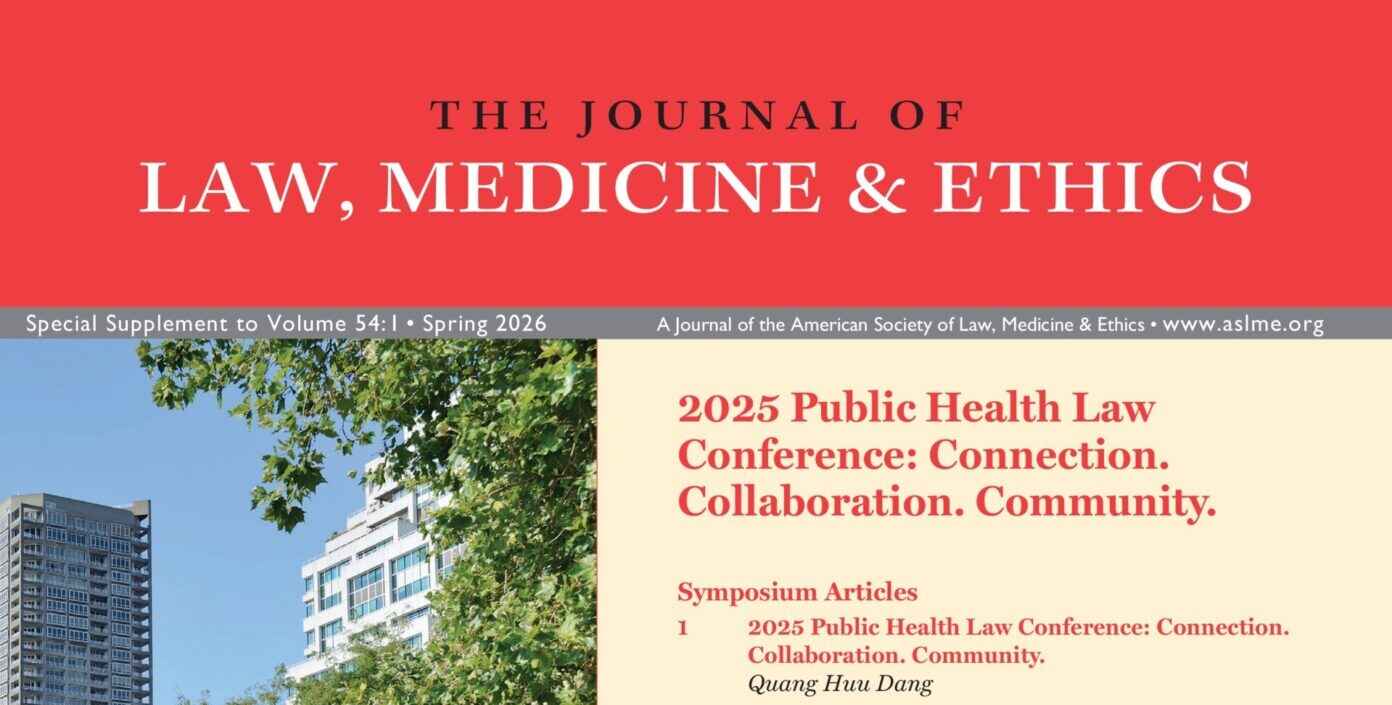
In September 2025, the Network for Public Health Law, with the generous support of the Robert Wood Johnson Foundation and the Kresge Foundation, organized the Public Health Law Conference in Seattle Washington. We were joined at the conference by over 400 attendees, including public health officials, administrators, practitioners, and students; leaders of community-based, advocacy, and power-building organizations; lawyers; researchers; care providers; as well as representatives from philanthropic foundations.
The conference theme—Connection. Collaboration. Community.— acknowledged this critical time in public health—a time when survival and progress both require working together to navigate an increasingly hostile law and policy environment. Plenaries and sessions at the conference examined the challenges and opportunities in our continued work to protect the health of communities across the country.
The recently published symposium issue of the Journal of Law, Medicine & Ethics (ASLME) is dedicated to an examination of some of the critical topics discussed at the conference.
The articles included in the symposium issue examine the mechanisms that will enable public health to continue to advance health and health equity despite current challenges, including the role of data in advancing health equity and providing protections; democratizing community health assessments; the impact of the judiciary on health; strategies for reducing the health risks of extreme heat; and law and policy that respects the health and dignity of people who use drugs.
Public health progress is rarely straightforward, and recent policy initiatives under the current administration illustrate the challenges we continue to face. Plans to open public lands for coal and copper mining, and fossil fuel extraction could increase air pollution. Proposed cuts to the Centers for Disease Control and Prevention risk eliminating programs critical to chronic disease prevention and emergency preparedness; while expansions of Medicaid work requirements raise concerns about barriers to coverage for low-income populations. We have also witnessed the threats to community and public health resulting from exclusionary immigration policies, unjust and violent—often fatal—immigration enforcement, and unsafe and dangerous conditions in overcrowded detention centers. Yet, our field has met and overcome grave challenges before.
The early 20th-century fight against industrial pollution, the civil-rights-era expansion of community health centers, and the response to HIV/AIDS all show how law and policy can pivot from harm to healing, if communities, advocates, public health practitioners and policymakers keep up the fight. In each case, sustained litigation and coalition building around equity and evidence-based policy helped re-establish protections for vulnerable populations.
Many of you, our colleagues, have been part of these enduring movements, carrying forward the lessons of the past into the struggles of today. Nothing in our history has been won without hard-fought battles, and the path to health justice is no exception. Whether in courtrooms, legislatures, or community coalitions, showing up—however we can—with bravery and persistence will define our ability to thrive despite recurring efforts to roll back public health protections.
Across every session during the conference, we heard from experts, advocates, and practitioners who are not only tracking the shifting legal terrain but also creating tools to navigate it. Together, we examined how law and policy can be a lever for health equity and a bridge between policy and lived experience. The challenges ahead are real: contested public health authority, deep political polarization, and the urgent need to confront inequities that harm health and shorten lives. But this conference showed that we have the knowledge, the tools, and importantly, the collective courage to meet this moment.
Read the full 2025 Public Health Law Conference Symposium Issue of the Journal of Law, Medicine & Ethics.
This post was written by Quang H. Dang, J.D., Executive Director, Network for Public Health Law.
The Network promotes public health and health equity through non-partisan educational resources and technical assistance. These materials are provided solely for educational purposes and do not constitute legal advice. The Network’s provision of these materials does not create an attorney-client relationship with you or any other person and is subject to the Network’s Disclaimer. Support for the Network is provided by the Robert Wood Johnson Foundation (RWJF). The views expressed in this post do not represent the views of (and should not be attributed to) RWJF.